
The Golden Seam: How Olympic Skaters Ellie Kam & Danny O’Shea Embody the Art of Kintsugi
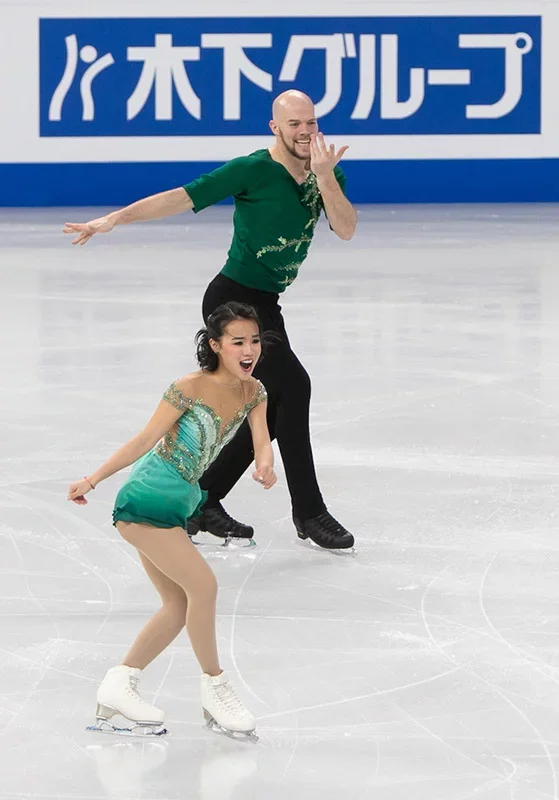
First Photo: Ellie Kam and Danny O’Shea started skating together in 2022. Photo courtesy of Dr. Benjamin Kam
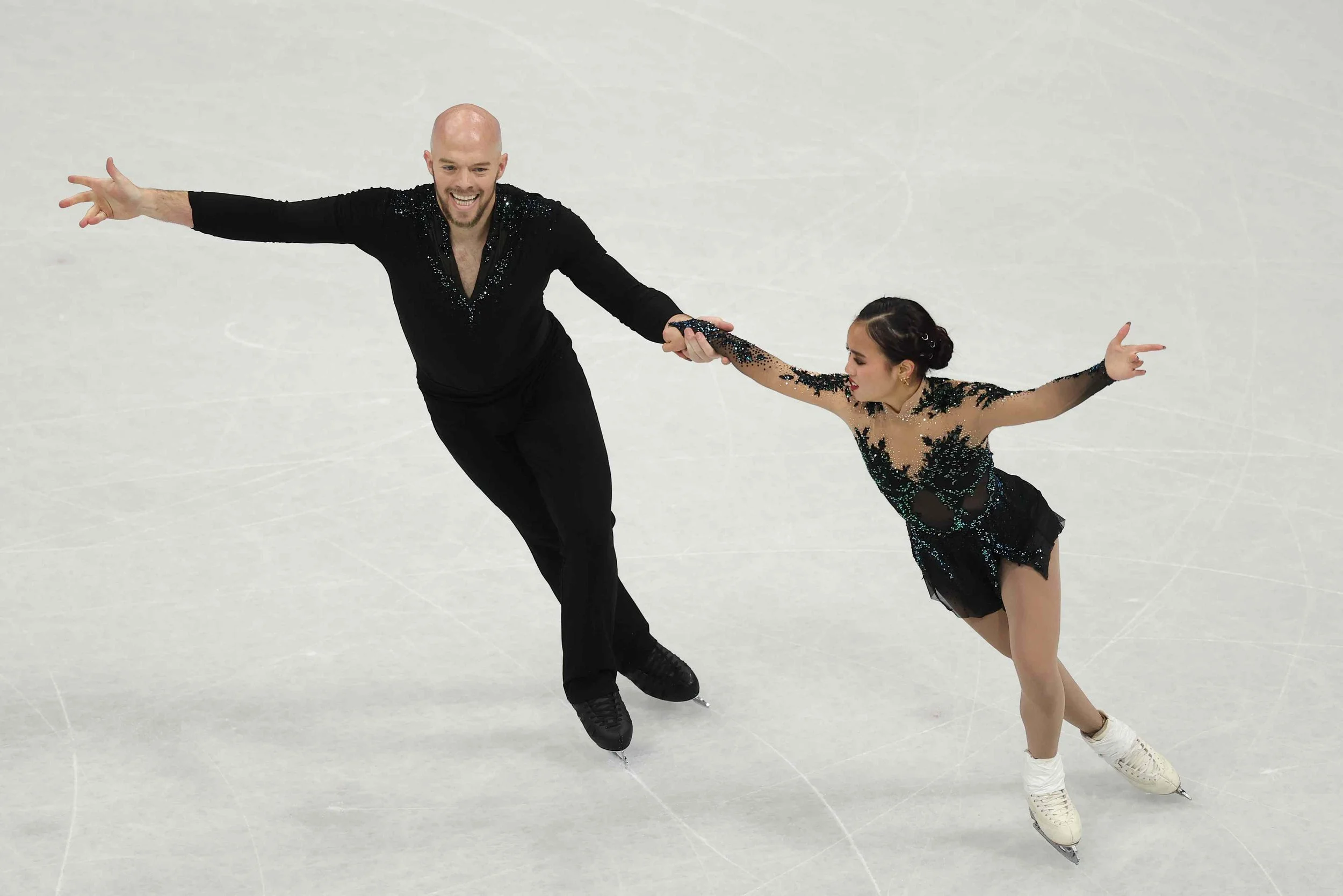
Second Photo: Danny O'Shea and Ellie Kam skating on Feb. 8, 2026. Photo courtesy of Stockman/Getty by
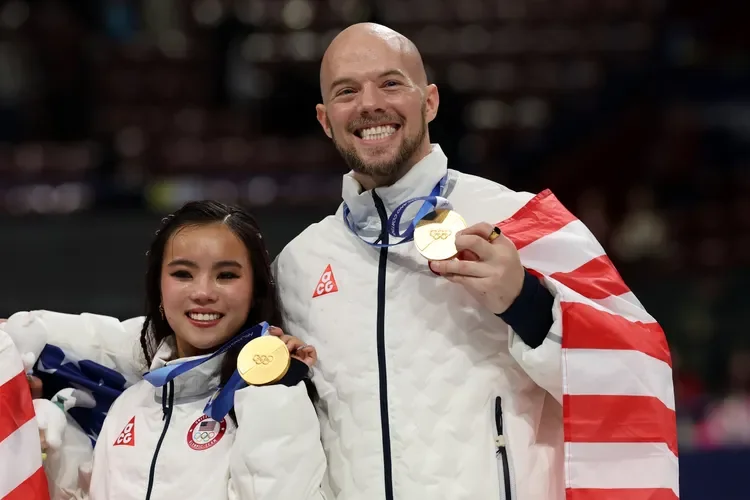
Third Photo: Ellie Kam and Danny O'Shea show off their gold medals on Feb. 8, 2026 in Milan. Photo courtesy of Stockman/Getty
When Ellie Kam and Danny O’Shea stepped onto the ice for the 2026 Milan-Cortina Winter Olympics, they did more than compete, they wrote a story of resilience that mirrored a centuries-old Japanese art form, Kintsugi. Their journey wasn’t about perfection.
It was about beauty born from breakage, about repair with gold rather than concealment, and about a partnership forged in setbacks but reinforced with trust, much like the philosophy of Kintsugi, where the cracks become the art.
From Different Chapters to One Partnership
Ellie Kam, 21, had already built a strong name as a promising U.S. pairs skater. Her previous partnership ended in 2022. Danny O’Shea, 35, had retired from competitive skating and was coaching when initially asked to skate with her.
What began as a favor soon became a strong bond. It was built on respect and unexpected promise. The bond grew so strong that O’Shea canceled a planned vacation. He did it to keep building their partnership.
They officially teamed up in 2022, and in the seasons that followed, they won national medals. They earned international podiums and later secured an Olympic spot.
But the path to Milan was far from smooth. O’Shea skated on a broken foot that later needed surgery. Kam fought a concussion. Both faced physical and emotional setbacks that almost derailed their Olympic dreams.
What makes their story compelling isn’t just reaching the Olympics. It’s how they did it. They embraced the messy parts of the journey.
They leaned on each other’s strengths. They learned to trust, forgive, and rebuild. They did it again and again.
What Kintsugi Really Means
Kintsugi (金継ぎ) is an old Japanese art of fixing broken pottery. It uses lacquer mixed with powdered gold, silver, or platinum.
Instead of hiding the damage, the technique highlights the cracks. It treats them as a visible and valuable part of the object’s history.
This approach contrasts with concealment. Instead, it celebrates story and resilience. It shows that something once broken can become even greater art.
As a philosophy, kintsugi teaches us to embrace imperfection. It honors change and the process behind it. It finds deep beauty in what once seemed flawed. Not simply a craft, it’s a way of seeing the world and our own lives: the breaks don’t diminish value; they add it.
Ellie & Danny: The “Kintsugi Pair”
Skaters, like pottery, are shaped by every fall, every imperfect landing, every injury, every comeback. Ellie and Danny’s partnership is about those golden seams of experience: where fractures could have become endings, they instead became places of connection and strength.
They’ve been called a “Kintsugi Pair” not because their story is flawless but because they embody the philosophy so many admire:
Visible resilience: Every stumble in training and every injury is part of their narrative, not something to be erased.
Transformative unity: Together, they turned setbacks into fuel for their best performances. They helped Team USA win Olympic gold in the team event.
Beauty from imperfection: Their journey reflects something universally human growth through adversity.
It reminds us that we don’t get stronger by avoiding cracks. We get stronger by facing them and weaving them into our stories.
Why Their Story Resonates Now
In an age of highlight reels and polished snapshots, the Kam/O’Shea arc feels like a breath of authenticity. Viewers crave narratives that acknowledge struggle, that honor the path instead of glossing over it, narratives rooted in resilience, second chances, and shared vulnerability.
Their dynamic is a 21-year-old rising star paired with a seasoned veteran who retired twice before making his Olympic dream real. It makes their partnership both relatable and inspiring. The life they built on the ice parallels the philosophy of kintsugi: break, repair, shine.
From Ice to Clay: Your Kintsugi Journey at ARTime BARRO
Just as Ellie and Danny embraced every crack along their journey, our Kintsugi workshops at ARTime BARRO invite you to honor your own breaks — the personal, emotional, and creative ones — and to repair them with intention and beauty.
Through the Japanese art of repair, you’ll:
Learn the meaning of kintsugi and why gold repair pottery is more than a craft — it’s a metaphor for life.
Experience firsthand how visible seams can become sources of strength.
Transform broken pieces into cherished artworks that embody resilience and story.
Join a Kintsugi workshop and let the philosophy that inspired an Olympic partnership transform your own creative practice. Just like the “Kintsugi Pair,” find beauty not by hiding your cracks, but by making them shine.